Projects
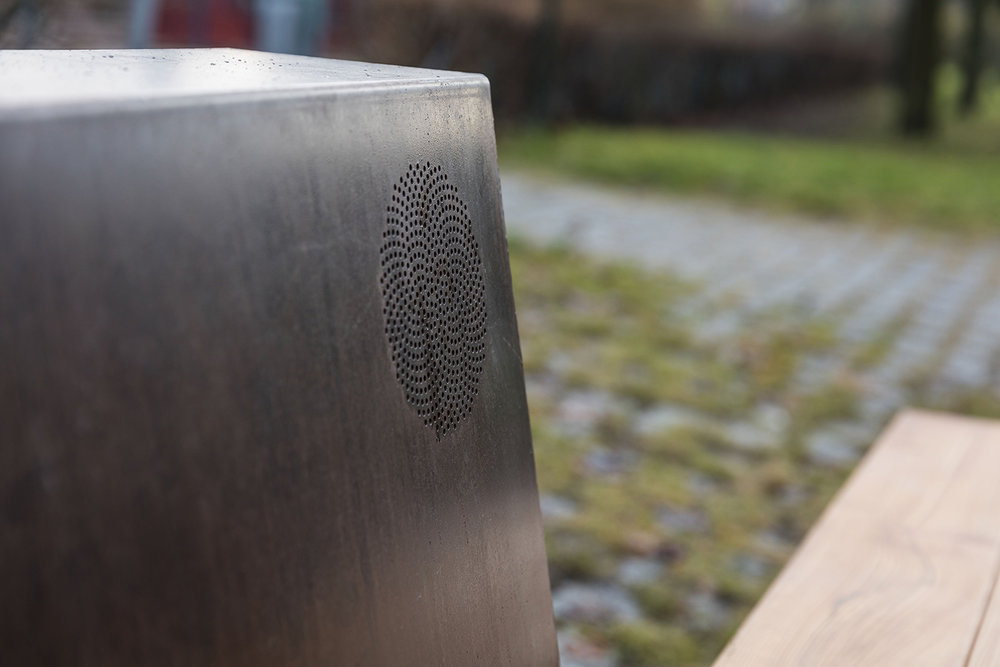
Wave - exploring sound solastalgia
by Marie Koldkjær Højlund, Sandra Kopljar, 2021/2022
Nature sounds are often seen as relaxing and understood as reconnecting our minds and bodies with something primeval.
Such sounds are used for stress recovery in the fields of medicine and psychology, as well as in our personal meditation app downloaded on our phone. At the same time, continuous climate anxiety has invaded many personal experiences in relation to nature environments and phenomena. An anxiety that seems impossible to escape. The piece “Wave—exploring sound solastalgia” pinpoints the listener’s internal conflict of something safe and calming, e.g. the sound of water, that at the same time may suggest something disastrous and dangerous—a raised sea level across the globe. In this sense, the piece also deals with fluctuating affects through the oscillation between scales—the local situation of sitting on a bench (remembering the sea), and a global climate crisis in the making, as well as a contrast between private and collective experience and responsibility.
Marie Koldkjær Højlund is a Composer, Sound Artist, and Associate Professor of Sound Studies at Aarhus University.
Sandra Kopljar is an Architect and Senior Lecturer in Architecture at the Department of Architecture and Built Environment, LTH, Lund University.
The sound piece Wave was commissioned by the Sound Environment Centre in 2021. The sound is also played at the Sound Bench during this exhibition.
Unit C
by Per-Johan Dahl, Caroline Dahl, 2011-17
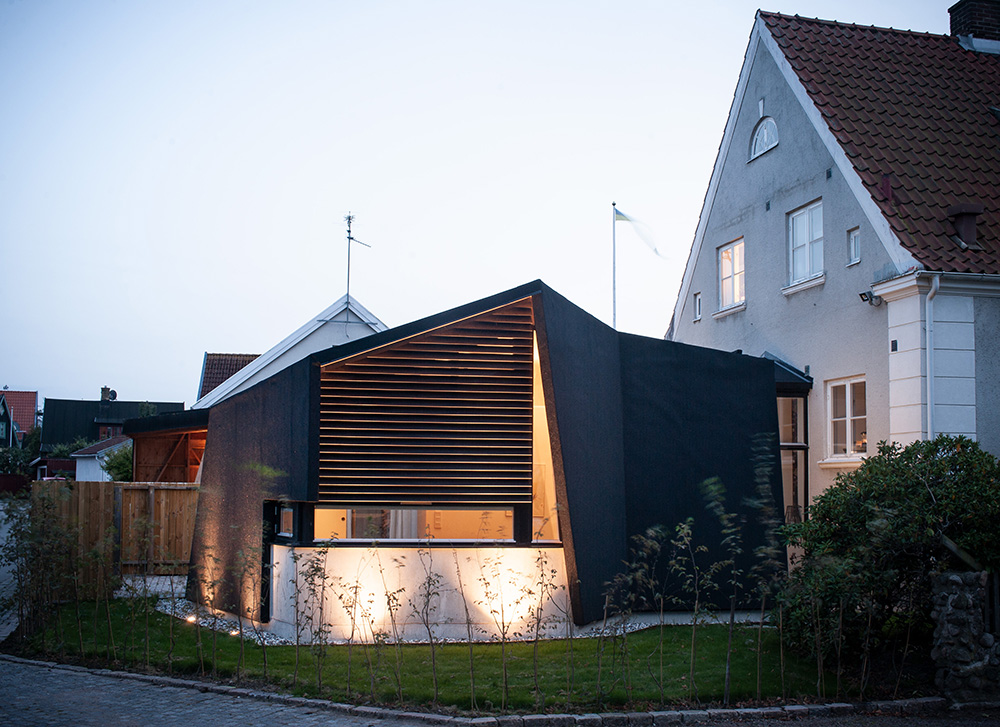
Unit C takes the design and construction of an emergent building type to explore relationships between the disciplinary context of a site and the planning objectives that guide historical preservation.
Photo: Fredrik Dahl
The applied research project encompasses an attached Accessory Dwelling Unit (ADU), designed for a neo-classical villa, built 1931 on a single-family residential lot in Råå, Sweden. The ADU comprises an emergent building type, which encountered disciplinary grounds in the late 1970s, primarily in south Canada and the American West. Defined as an autonomous living unit and built as a complementary structure to the main building on a single-family residential lot, the ADU challenges universal zoning by adding density to suburbia.
Per-Johan Dahl is an architect and Associate Professor in Architecture at the Department of Architecture and Built Environment, LTH-Lund University.
Caroline Dahl is a Senior Lecturer in Landscape Architecture at SLU Landscape with an MA in Architecture and an MA in Urban Planning and Design.
The Ins- and outs of the closet
Exploring metaphorical and literal spaces
by Paulina Prieto de la Fuente, 2024
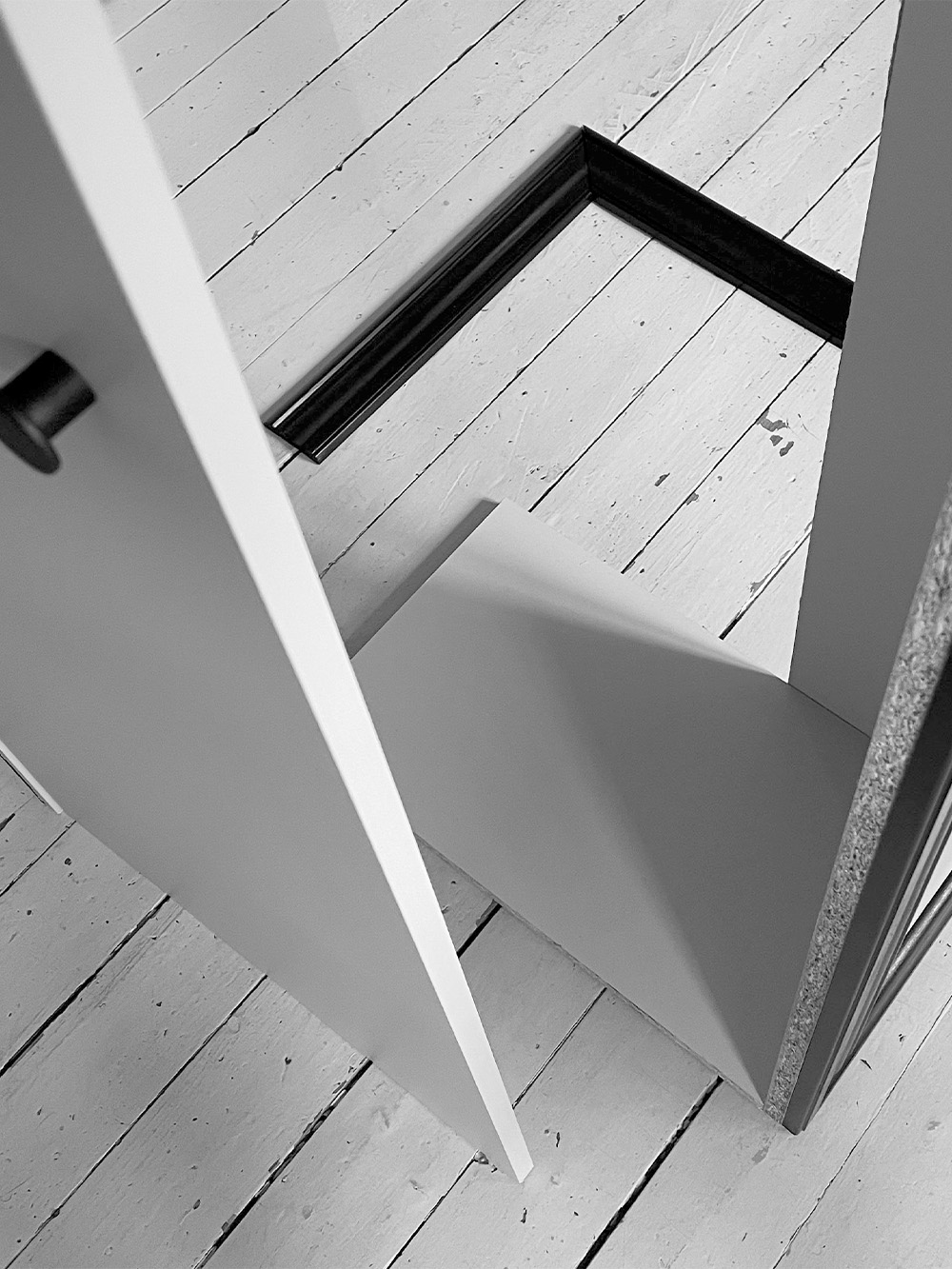
The ins- and outs of the closet is a piece that sets a research application in motion. The application titled, “A hundred years of closets - a sequential journey through the 20th century and everything that didn't fit” is centered around an interest/ obsession/ scrutiny directed into the closet as a cultural and identity-forming space. It investigates the wardrobe, both in the practical sense as storage, and as a secret and metaphorical object of identity-formation. Via architectural-artistic methods the wardrobe/ closet will be scrutinized and explored as a room type and a piece of furniture over the course of a 100 years (the 20th century). The purpose of this investigation is to bring to the fore interesting and unforeseen examples of closet design as well as speculating and meditating over the cultural and subjective possibilities there are within, between and beyond walls made of wood, clay, fabric, concrete, brick. The project aims to raise awareness and contribute to the knowledge about how to convert identity-formational ideas to construction of interior spaces, without losing sight of non-tangible aspects such as atmospheres and personal sensory experiences.
Paulina Prieto de la Fuente is an Architect and Lecturer at the Department of Architecture and Built Environment, LTH-Lund University.
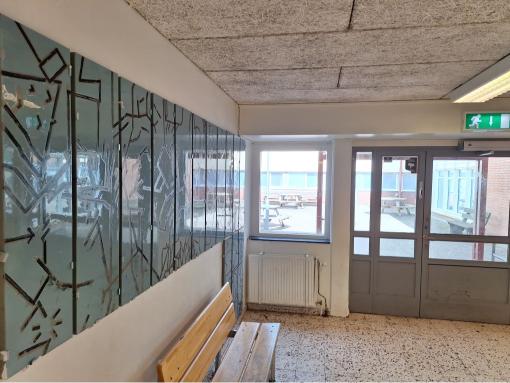
What's on your mind?
by Martin Svansjö
For almost a year, I met with five pupils from the 8th grade for one hour each week. They were Agnes Ekegren, Bella Ekdahl, Josefine Högbo, Nelly Granstedt and Leia Holgersson Gyjjkol. Along with exercises, we – they – made drawings of possible or actual situations in life, whether wished for or feared. Line-drawn versions captured life in general, in the room, in the group, and beyond. The steel plates display re-drawn and combined versions in the entry space, which is mainly occupied by typical locker room lockers. The blue is the actual paint used by the Swedish Post ages ago.
Martin Svansjö is an Artist, Architect and Document Collector working as a Lecturer in Architecture at the Department of Architecture and Built Environment, LTH-Lund University and at IKDC Industrial Design Lund University.
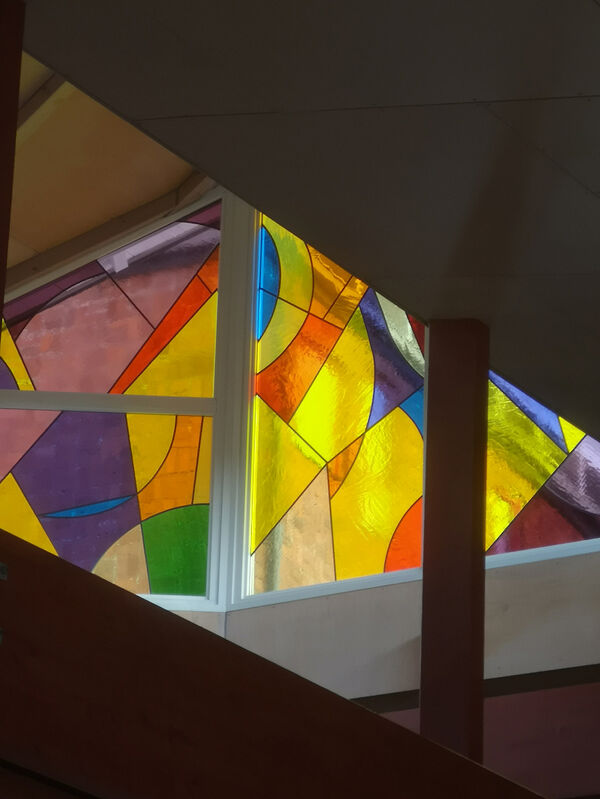
Cosmos by Niklas Nihlén
When St. Thomas' church in Lund is rebuilt in 2019, the altar will be placed in the east with the consequence that a large section of windows needed to let in less light. Then we concluded that the most sustainable option was a composition with colored glass. There is also a smaller window painting in the Mariakapellet.
Niklas Nihlén is an Artist, also working with interior architecture. Lecturer in Architecture at the Department of Architecture and Built Environment, LTH-Lund University and at IKDC Industrial Design Lund University.
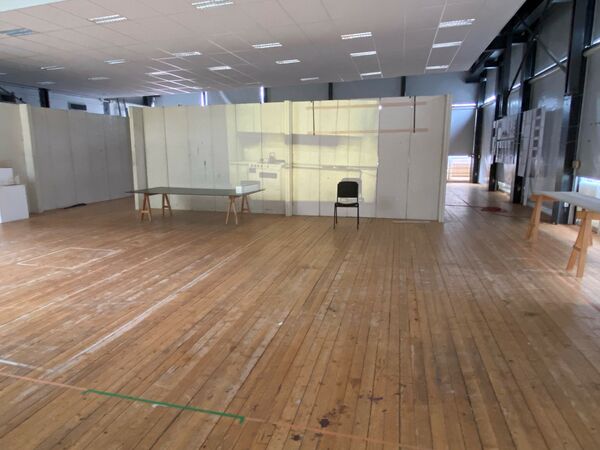
Testing full scale by Cecilia Wendt
In the course Kitchen Regions: Conveying the Design, Aesthetics, and Politics of the Kitchen, AFOA30, for students in Industrial Design Engineering, the full-scale laboratory influenced the workshop Do Kitchens Exist? Artistic Kitchen Aspects in ways I had not expected. More questions arose and influenced the workshop, such as the inquiry into how the full-scale laboratory at LTH in Lund came about.
Cecilia Wendt is an artist, has worked as associate professor and senior lecturer, and is a guest teacher at the Department of Architecture and Built Environment, LTH-Lund University
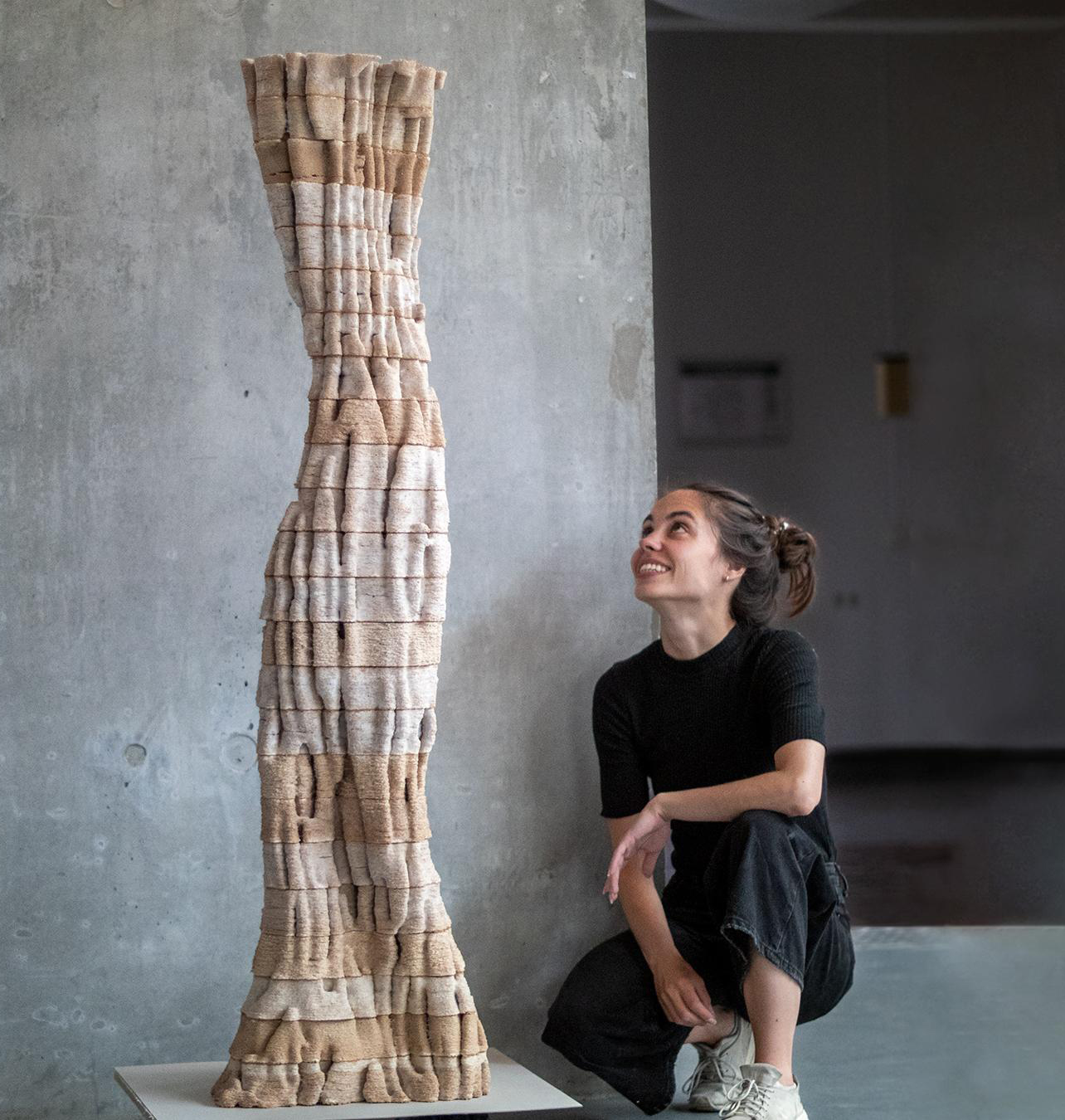
Protomycokion Biodigital Furutures
by Ana Goidea and David Andréen, 2020
Protomycokion is an architectural and material experiment that suggests that the boundary between biology and engineering, human and ecology, can be breached - leading to new circular and sustainable paradigms. It is fabricated by 3D printing mycelium composite materials into a geometry that is algorithmically generated to satisfy the demands of fungus, printing process, and architectural outcome. Protomycokion employs the transformative power of biology to repurpose abundant by-products of plant fibres into a new class of performative materials for architecture. In the future, such biomaterials can be alternative construction materials that are biodegradable and don’t rely on extraction of finite resources or energy-intensive production. It challenges traditional boundaries and proposes a future where architecture becomes an interactive part of the ecosystem, revitalizing our relationship with the environment.
Ana Goidea is an Architect and PhD, currently active as the founder of Hyphaen in Copenhagen, Denmark.
David Andréen is an Architect and Senior Lecturer in Architecture at the Department of Architecture and Built Environment, Lund University, where he leads the bioDigital matter lab.
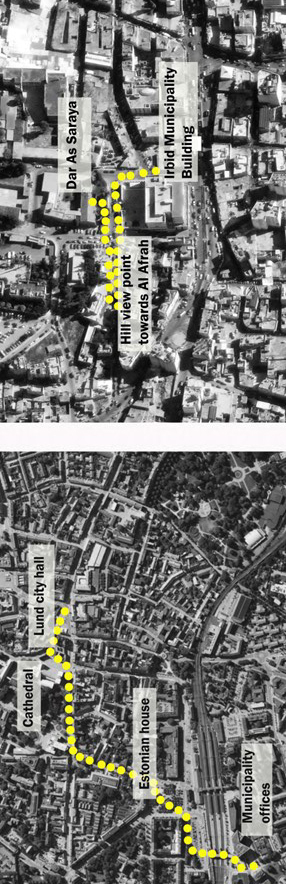
Lund and Irbid: a journey of bordering
by Gunnar Sandin and Marwa Al Khalidi
In 2020 we performed a dialogic event, labelled Lund Irbid Parallel Walk, connecting two geopolitical regions and cities: Lund in Sweden and Irbid in Jordan. The dialogue was publicly staged in cooperation with AURA gallery in Lund, as a synchronized walking and talking act, where each of us invited one walking companion, and an audience on a digital platform. Recognizing that the two cities on the one hand represent a division between a global North and South, the act also pointed out local complexities of bordering processes, reflecting the two cities’ respective history, especially as regards zones of conflict and forced migration.
In a follow-up text in Field: a free journal of architecture, we pointed out areas in the two cities, extending the routes of the walking act, showing urban principles of integration, including differences as regards the architectural culture of housing for newcomers.
(Al Khalidi & Sandin, 2023, Bordering Principles and Integration in Urban Context)
The work exhibited here at the Museum of Artistic Process and Public Art, 2024, is the third part of this joint project, with the title: Lund and Irbid: routes of bordering. It consists of a pairing of photos from each city that reflect modern histories of bordering.
Gunnar Sandin is an Artist and Professor in Applied Aesthetics at the Department of Architecture and Built Environment, LTH-Lund University.
Marwa Al Khalidi is an Architect and Lecturer in Architecture and Planning at University of Kent, Canterbury.
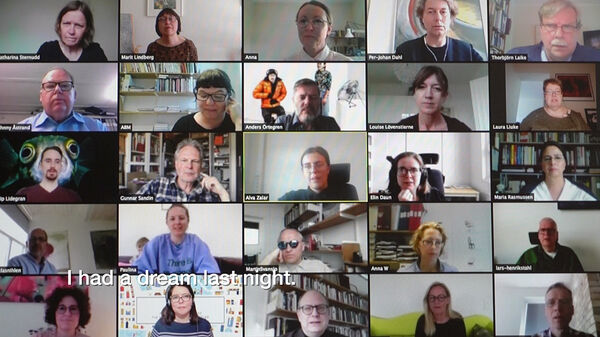
A stream of films: Artistic processes and research
The College by Marit Lindberg
The staff at the Lund School of Architecture meet at their weekly information session.
Normally, "Fika Forum" is held in the staff kitchen once a week. The prefect leads the meeting. Important information is exchanged.
During the Covid pandemic, the meetings are held on Zoom instead. Despite the physical distance, a new kind of intimacy emerges as colleagues who have never visited each other look into each other's homes in the background.
Favorite books appear on the bookshelf, a child calls out, a pet runs by.
The meeting is about to end and the head of department thanks the employees. One of the researchers then raises her hand and wants to add something important. It seems that all the colleagues have had the same dream that night.
Marit Lindberg is an Artist and Senior Lecturerat the Department of Architecture and Built Environment, LTH-Lund University.
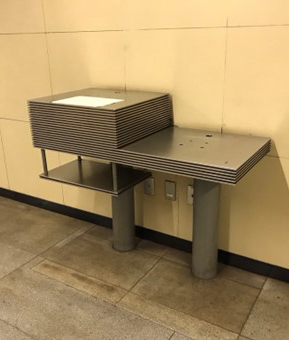
Thomasson on Campus? by Lars-Henrik Ståhl
Lund University's 'LTH Fountain' shows resemblances to the type of objects associated with a Japanese conceptual art movement known as 'Hyperart Thomasson' in the 1980s. The movement documented useless urban leftovers – structures with a former function, discovered as part(s) of buildings or the built environment. In this context, Thomasson objects stand out as “strange objects that appear accidentally in the process of urban transformation”. Professor of Architecture Lars-Henrik Ståhl is currently developing a short film exploring this connection. 'Thomasson on Campus?' is screened here as a work-in-progress.Lund University's 'LTH Fountain' shows resemblances to the type of objects associated with a Japanese conceptual art movement known as 'Hyperart Thomasson' in the 1980s. The movement documented useless urban leftovers – structures with a former function, discovered as part(s) of buildings or the built environment. In this context, Thomasson objects stand out as “strange objects that appear accidentally in the process of urban transformation”. Professor of Architecture Lars-Henrik Ståhl is currently developing a short film exploring this connection. 'Thomasson on Campus?' is screened here as a work-in-progress.