Programme in Architecture 26-29 January 2026
School of Architecture at Lund University invites you to presentation days for the degree project A-programme (AAHM01).
The presentations are public and take place in A-building, Klas Anshelms väg 16, 223 62 Lund.
Welcome!
Program (in Swedish)
Måndag 26 januari - Fullskalelabbet
Examinatorer: Jesper Magnusson (JMag), Sandra Kopljar (SK), Anna Wahlöö (AW)
Handledare: Thomas Hellquist (TH), Nina Aronsen (NA), Maria Rasmussen (MR),
Jesús Mateo (JM)
Kritiker: Johanna Jonsson (JJ), Adriana Seserin (AS), Niklas Nihlén (NN),
Mats Hultman (MH), Rúni Weihe (RW)
9:40-10:50 Linnea Johansson (JMag/TH) JJ, NN
10:50-12:00 Andreas Färegård (SK/NA) JJ, MH
13:00-14:10 Alma Karlsson (JMag/MR) AS, MH
14:10-15:40 Saga Persson & Signe Rittfeldt (AW/JM) AS, RW
Tisdag 27 januari - Fullskalelabbet
Examinatorer: Per-Johan Dahl (PJD), Mats Hultman (MH), Anna Wahlöö (AW),
Erik Sigge (ES)
Handledare: Nina Aronsen (NA), Tomas Tägil (TT), Mattias Kärrholm (MK)
Kritiker: Beatrice Eckord (BE), Fredrik Linander (FL), René Andersson (RA),
Andreas Olsson (AO), Maria Rasmussen (MR), Pablo Miranda (PM)
9:40-10:50 Greta Ståhlbom (PJD/NA) BE, RA
10:50-12:00 My Hartman (MH/NA) BE, AO
13:00-14:10 Johan Björck (AW/TT) FL, MR
14:10-15:20 Jon Liander Ankarcrona (ES/MK) FL, PM
Onsdag 28 januari - Fullskalelabbet
Examinatorer: Erik Sigge (ES), Fredrik Torisson (FT), Sandra Kopljar (SK),
Pimkamol Mattsson (PM), Jesper Magnusson (JMag)
Handledare: Thomas Hellquist (TH), Mattias Kärrholm (MK), Nina Aronsen (NA),
Jesús Mateo (JM), Andreea Marcu (AM)
Kritiker: Mattias Andreasson (MA), Lina Dahlström (LD), Tomas Tägil (TT), Laura Liuke (LL), Mattias Kärrholm (MK), Nina Aronsen (NA), Erik Tonning Jensen (ETJ)
9:40-10:50 Omid Mirzaie (ES/TH) MA, TT
10:50-12:00 Louise Leijon (FT/MK) MA, LL
13:00-14:10 Amanda Perols (SK/NA) MA, MK
14:10-15:20 Navid Mirzaie (PM/JM) LD, NA
15: 20- 16:30 Olof Nilsson (JMag/AM) LD, ETJ
Torsdag 29 januari - Fullskalelabbet
Examinatorer: Fredrik Torisson (FT), Mats Hultman (MH), Pimkamol Mattsson (PM),
Sandra Kopljar (SK)
Handledare: Thomas Hellquist (TH), Jesús Mateo (JM), Jesper Magnusson (JMag),
Tomas Tägil (TT)
Kritiker: Ida Stavenow (IS), Tomas Lauri (TL), Tomas Tägil (TT), Monika Jonson (MJ), Henrik Almquist (HA), Jenny Fröslee Jonsson (JFJ)
9:40-10:50 Adelie Centerstam (FT/TH) IS, TT
10:50-12:00 Hanna Björklund (MH/JM) IS, MJ
13:00-14:10 Felix Olofsson (PM/JMag) TL, HA
14:10-15:40 Sandra Erlandsson & (SK/TT) TL, JFJ
Matilde von der Groeben
Ca 16.00 AVSLUTNING i Fullskalelabbet
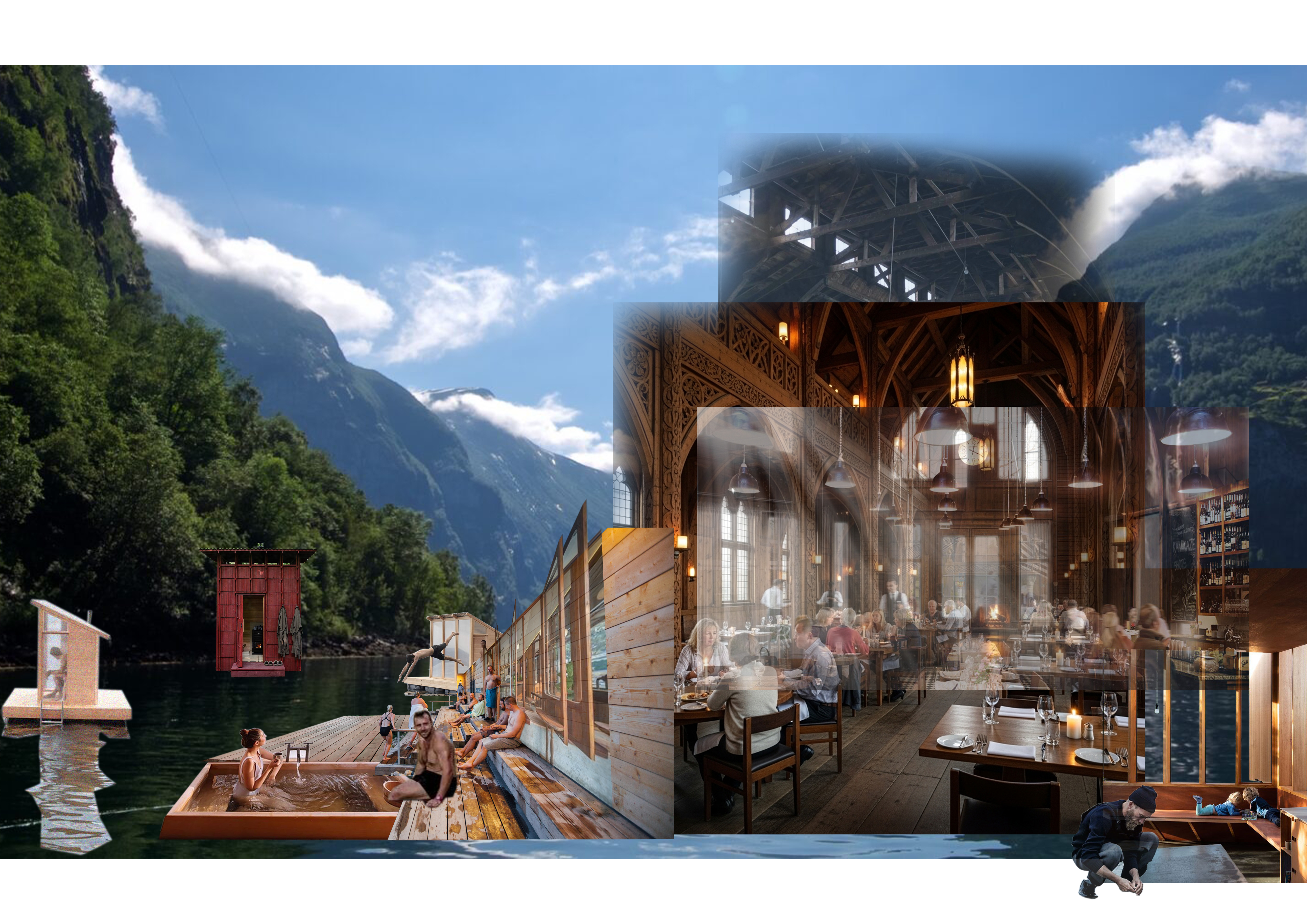
Johan Björck / A social cookbook / Building Social Capital Through Sauna Architecture
This master’s thesis explores how architectural design can foster social connection, community, and social capital through the creation of a public sauna in Geiranger. Grounded in social theory and architectural research, the thesis responds to growing concerns about social isolation and declining public interaction, emphasizing the importance of physical public spaces for mental, physical, and societal well-being.
Historically, public places such as agoras, forums, and coffeehouses have played a central role in civic life, though their social power has at times been viewed as a threat by authorities. In contemporary democratic societies, physical public spaces are once again valued as essential sites for dialogue, trust-building, and community resilience, particularly in contrast to increasingly suspicious views of digital platforms. This renewed interest coincides with a resurgence of sauna culture in the Nordic context, repositioning the sauna as an important social gathering space.
The thesis applies theories of social capital, public space, and the concept of the “third place,” drawing on scholars such as William H. Whyte, Jan Gehl, Ray Oldenburg, Jane Jacobs, and Robert D. Putnam. Key concepts include accessibility, trust, reciprocity, informal social control, and the distinction between bonding- and bridging social capital. Rather than focusing on urban scale, the study applies these theories to a single building typology, a public sauna.
Through site studies, interviews, theoretical research, and applied design experiments, the project investigates how architectural elements such as seating, light, water, sound, and spatial organization can encourage lingering, conversation, and interaction between strangers. Geiranger, Norway, serves as the case study, offering a unique context shaped by tourism, seasonal workers, strong local social capital, and natural surroundings.
The thesis ultimately aims to function as a practical “cookbook” or “toolbox” for those interested in making public places more socially engaging and inclusive. Defining architectural qualities and tools that support inclusive, attractive, and socially sustainable environments. By translating social theory into concrete design strategies, it seeks to clarify if a sauna can successfully foster community or not.
Presentation in Swedish.
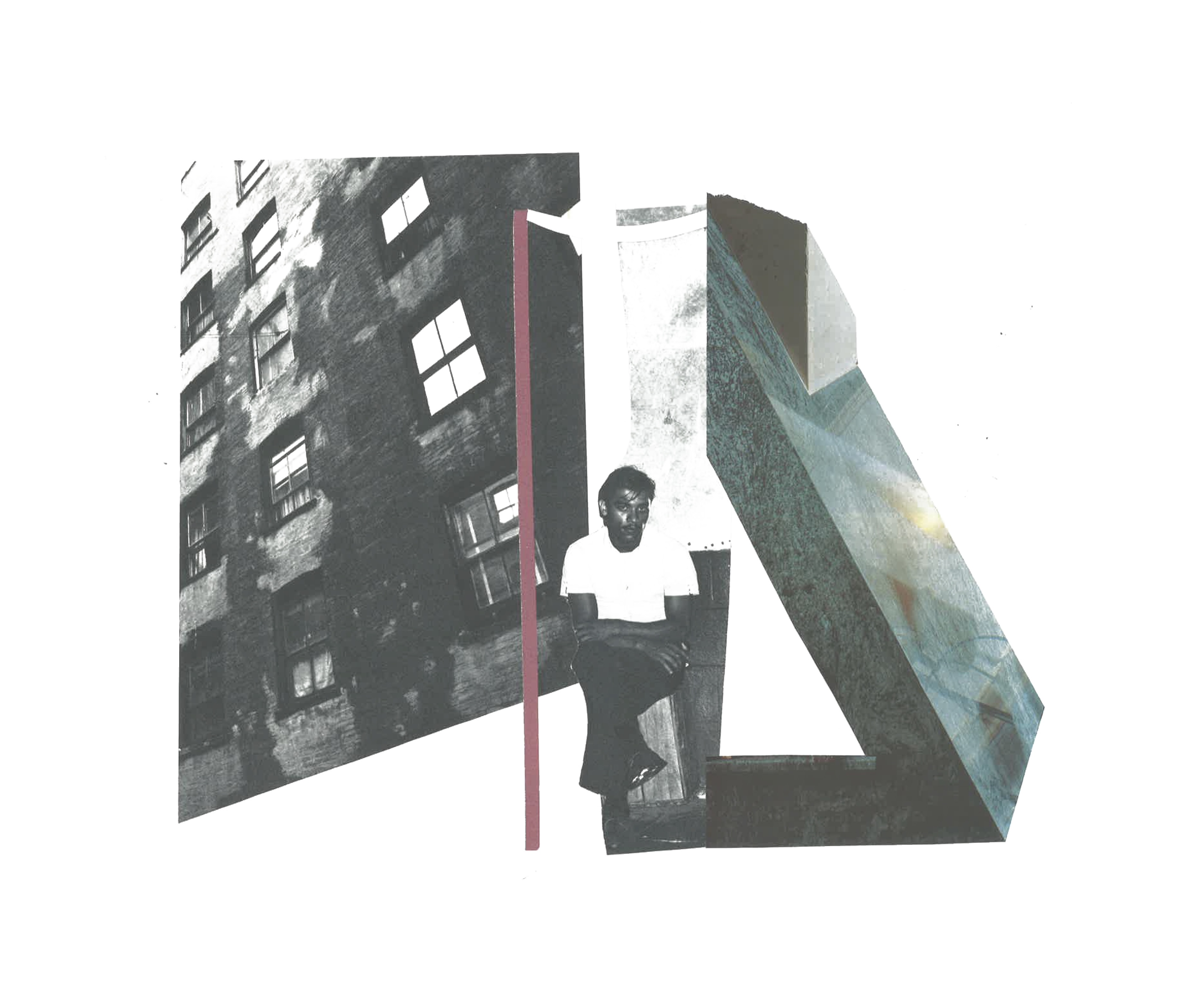
Andreas Färegård / Ambivalenta strukturer
Where does architecture begin and end?This thesis explores where, when, and how the threshold between furniture and architecture takes shape.
By working with architectural ideas through the format of furniture, the project examines architecture’s most fundamental components at a more intimate and body-scaled level than is typically addressed within architectural education. The investigation raises questions about how furniture can operate as an architectural tool—capable of transforming, reinforcing, or adding complexity to existing spatial conditions. What insights can be gained from more intimate spatialities, and what values might they hold?
The investigation is carried out through models, collages, and sketches, in dialogue with analysis and reflection. The outcome takes the form of a series of structures and objects that move back and forth within the borderland between architecture and furniture, where categories sometimes dissolve and at other times become more clearly defined.
The presentation will be held in Swedish.
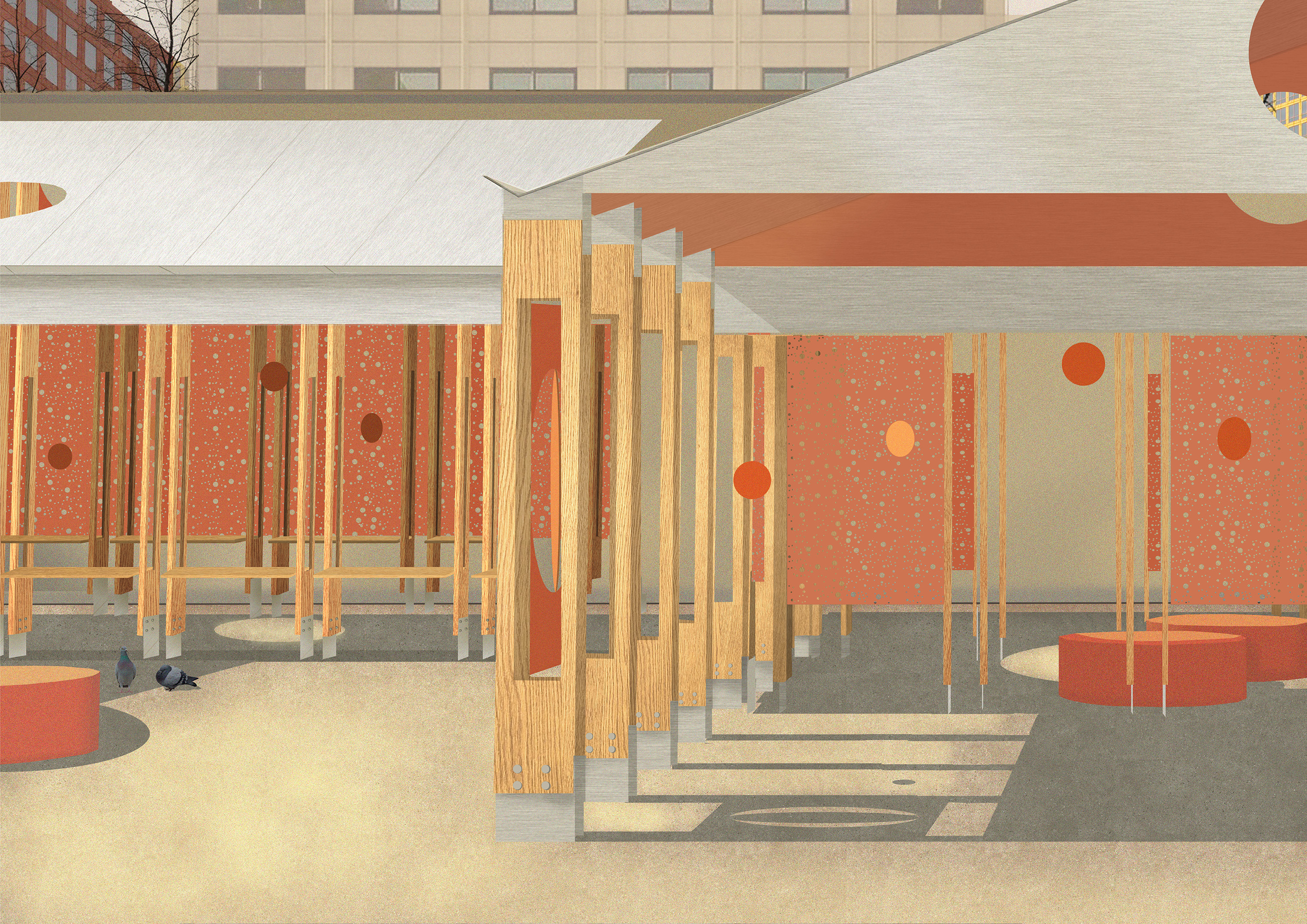
Alma Karlsson / Designing for contemplation in New York / The Perches
- exploring the concept of urban oasis within an exceptionally urbanized setting
In this project, I aim to explore the concept of urban oasis, or contemplative space within an exceptionally urbanized setting.
The rather diffuse term "contemplative space" refers to architectural or natural typology with specific spatial qualities that provide retreat and stillness, offering a counterbalance to the hustle and bustle of modern urban life. In cities like New York, where green space is scarce and densification is increasing, such spaces are becoming increasingly rare, especially when free from commercial agendas. which is where the case study is carried out. Given these circumstances, extra emphasis will be put on exploring nature's built-in calming effects and how, in a design process, one can work with the same qualities as it naturally possesses - copy nature's mode of operation, when green design is not an option or cannot be supported sufficiently.
The goal is to present findings from existing architectural and landscaping research, incorporating insights from environmental sciences, such as neuroscience, phenomenology, and environmental psychology. Through three case studies, each with unique challenges and opportunities, I aim to explore how the knowledge we have at our disposal, when applied to a physical place, can bring about a conveniently employed architectural system which can be implemented where needed.
How can we use the traits of contemplative natural elements in artificial/built environments? What might an easily employed spatial response to a heavily stimulative environment look like?
The presentation will be in Swedish.
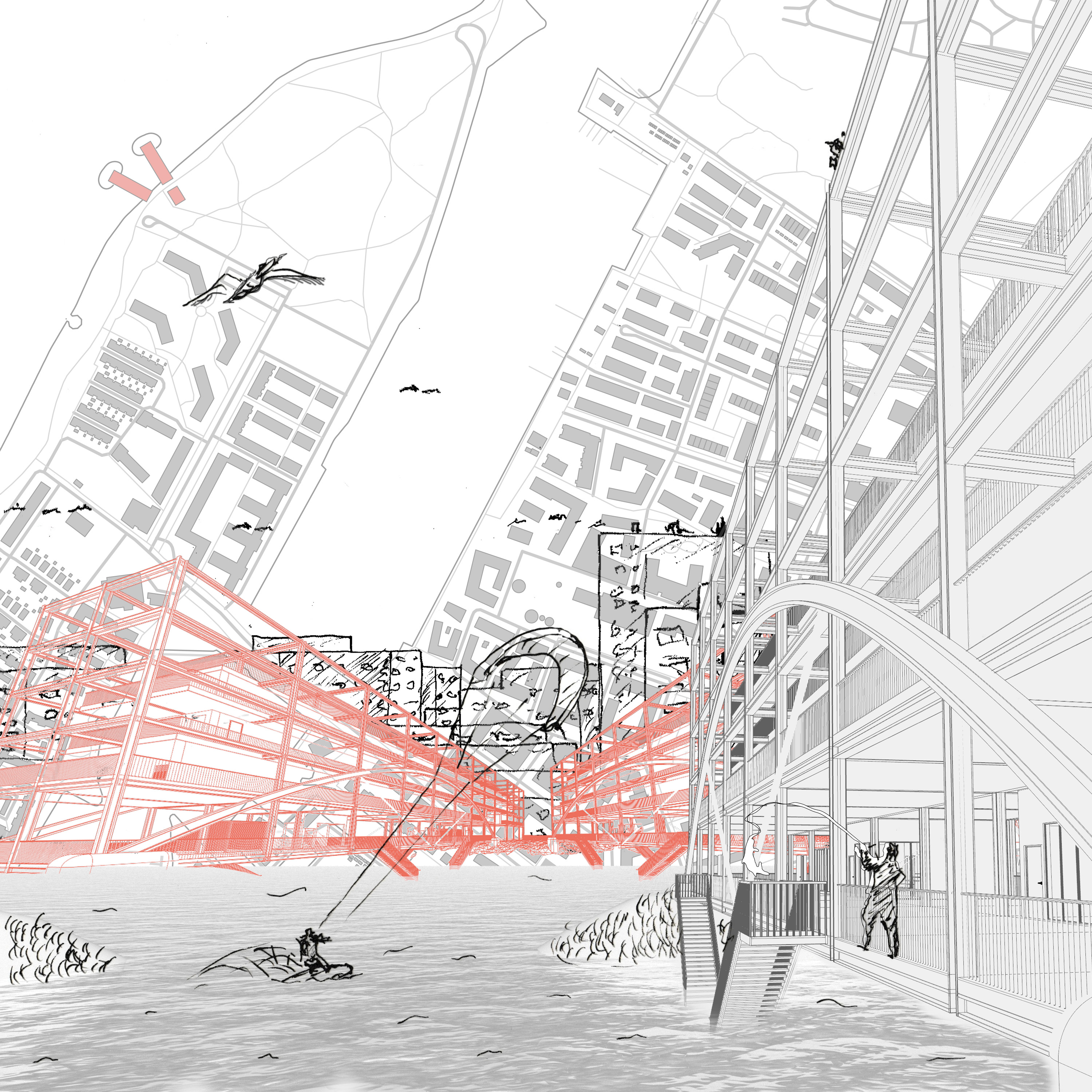
Navid Mirzaie / Där staden möter havet.
How can urban development take place as close to the sea as possible, while also creating a sense of place and urban intensity?
A recurring aspect of many urban situations by the sea - “urban” meaning a designed and built-up environment - is that access to the blue spaces is often limited or compromised in some way. There are good examples of cities with proximity to water where the challenges are different from those along the Scanian coast. Some are protected by an archipelago, others by lagoons, some are not as exposed to wind and waves and most places further north in Scandinavia are lucky that the land uplift following the last Ice Age is still ongoing, keeping pace with the sea level rise caused by global warming. That is not the case in Scania and specifically not in Malmö.
The measures taken to protect the city from storm surges or other high-water events often result in some form of barrier. This barrier can take different forms: sometimes a levee, sometimes a greater distance to the water's edge and in other cases, sharp edges like a high quay. Can architecture bridge this division between city and sea and remove some of these barrier effects?
The purpose of this thesis in architecture is to explore how one such example of a meeting between the city and the sea can be designed. A design that makes the blue space more accessible without being vulnerable - to the extent it is reasonable - to the destructive forces of the sea, not only structurally but also in a way that does not feel unsafe or uncomfortable.
The presentation will be held in Swedish.
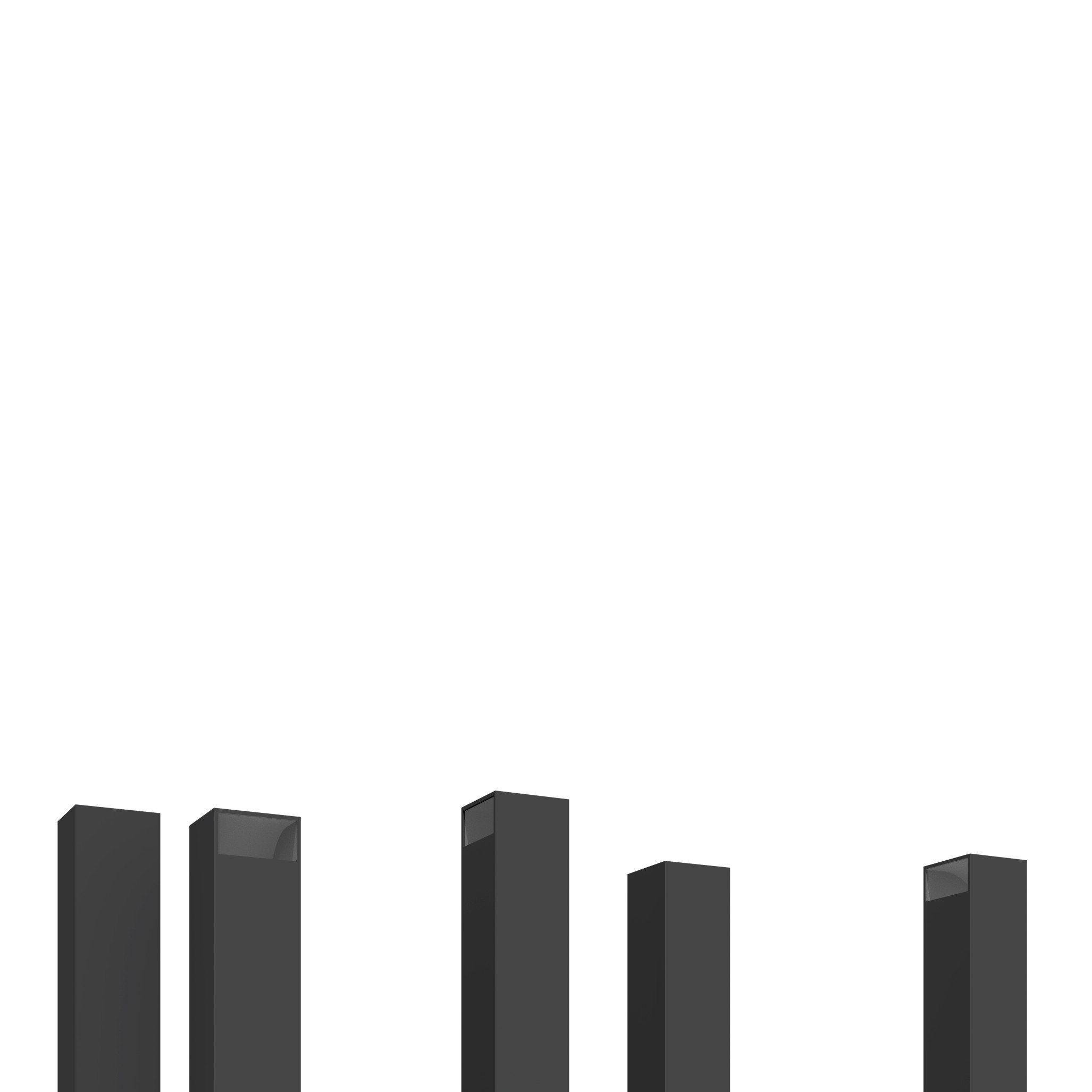
Felix Olofsson / From Storing to Gathering
Frihamnen in Stockholm is currently undergoing a major transformation. An area that for a long time has served as a central hub for port and industrial activities is now planned to become a new urban district with housing, offices and public services. In this process, several existing industrial buildings face demolition in order to make room for new development. As a result, important layers of the site’s history, identity and architectural character risk being erased.
This thesis investigates how Frihamnen can be developed through the reuse of existing industrial buildings rather than through large-scale demolition. The project is based on the premise that many of these structures are poorly suited for conversion into housing or office space, yet possess qualities that can contribute in other ways to urban development. Through their scale, robust construction and distinct industrial expression, these buildings hold the potential to accommodate public functions and to act as social and cultural resources for the city.
The work focuses in particular on Magasin 4, a warehouse building in Frihamnen that is currently used by Swedish Television for storage, but which is at risk of demolition as part of the area’s redevelopment. Historically, the building has been closely connected to storage and logistics related to the adjacent silo structures. This thesis explores how Magasin 4 could be transformed into a public building with cultural functions, and how such a transformation could contribute to activating Frihamnen both during and after the ongoing urban redevelopment process.
Through site analysis, historical research, reference studies and design explorations, the project develops an architectural proposal that examines how culture can be given a more permanent and integrated role in the transformation of Frihamnen. The ambition is to demonstrate how the reuse of industrial buildings can support an urban development approach that goes beyond new construction, instead engaging with existing structures and allowing the site’s industrial history to remain present within the future city.
The presentation will be held in Swedish.
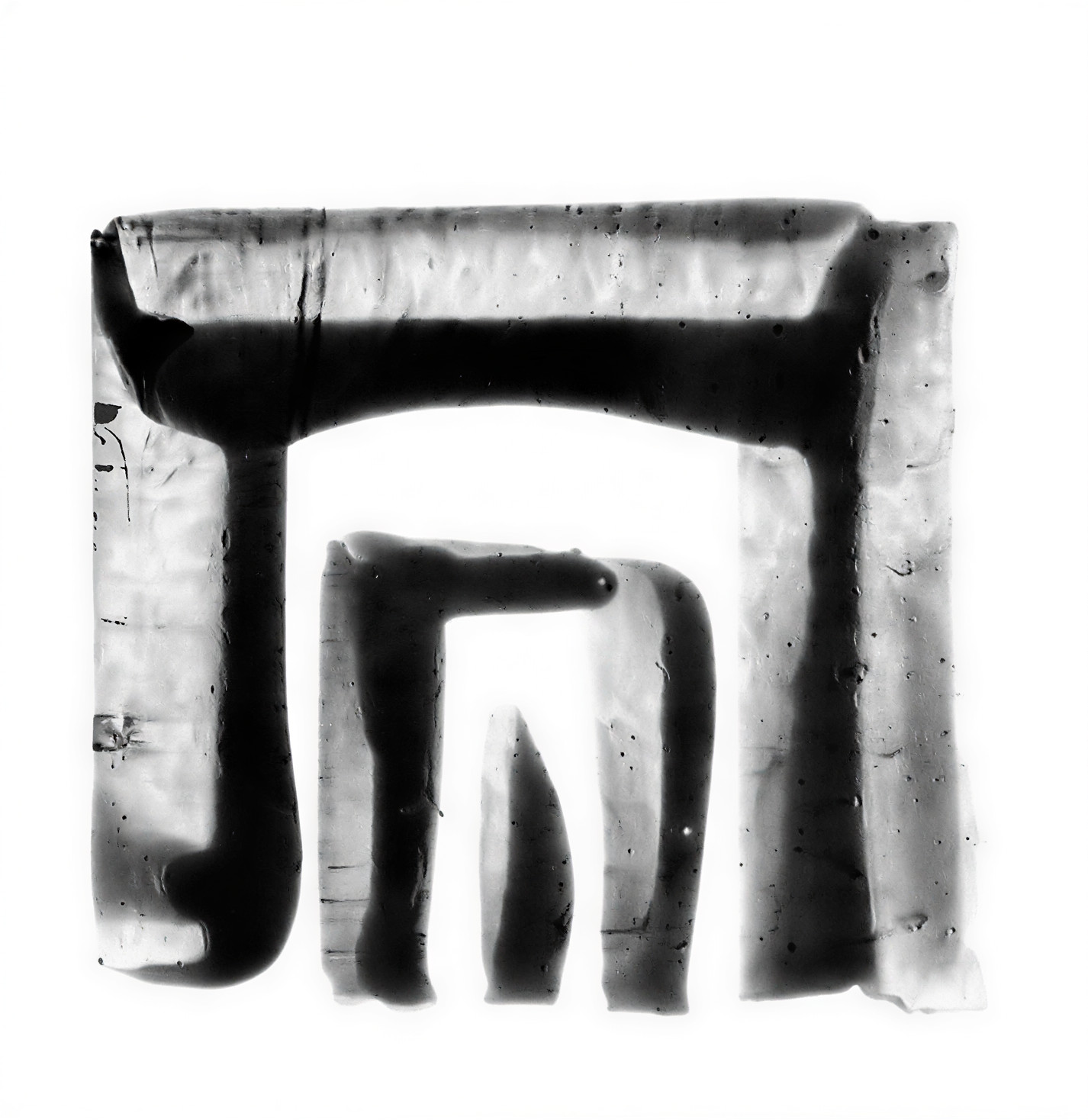
Greta Ståhlbom / Written Layers: Hasslemölla Gård
The mill at Hasslemölla is first mentioned in 1546, and today the site consists of a farmstead with buildings dating from the mid-19th century. Historically used as a mill, dwelling, stables, storage and carriage shed, the buildings are now proposed to be transformed into a new centre for the Storkriket Biosphere Reserve. This thesis explores a phased transformation of the site, with proposed interventions as an initial step in reactivating the farm while allowing for future change.
The project approaches Hasslemölla as a palimpsest: a place where traces of previous uses, atmospheres and material conditions remain visible beneath new interventions. Rather than erasing the existing layers, architectural interventions are introduced to highlight, reinforce or reinterpret them. Time is treated as an active design parameter, acknowledging that future decisions may lead to the preservation of some elements while others are allowed to decay or disappear. Architectural interventions therefore aim to do one of two things: either strengthen the meaning and continued care of specific elements, or grant them significance in the process of their passing.
This approach results in a series of small-scale interventions that form new architectural layers; written over, alongside or in place of the existing ones. The interventions differ between preservation, contemporary use and architectural addition. The project is structured in phases, illustrating how present-day actions can support a long-term transformation and allow the site to adapt organically to its new role, and how a story of a place can have multiple endings.
Presentation in Swedish.
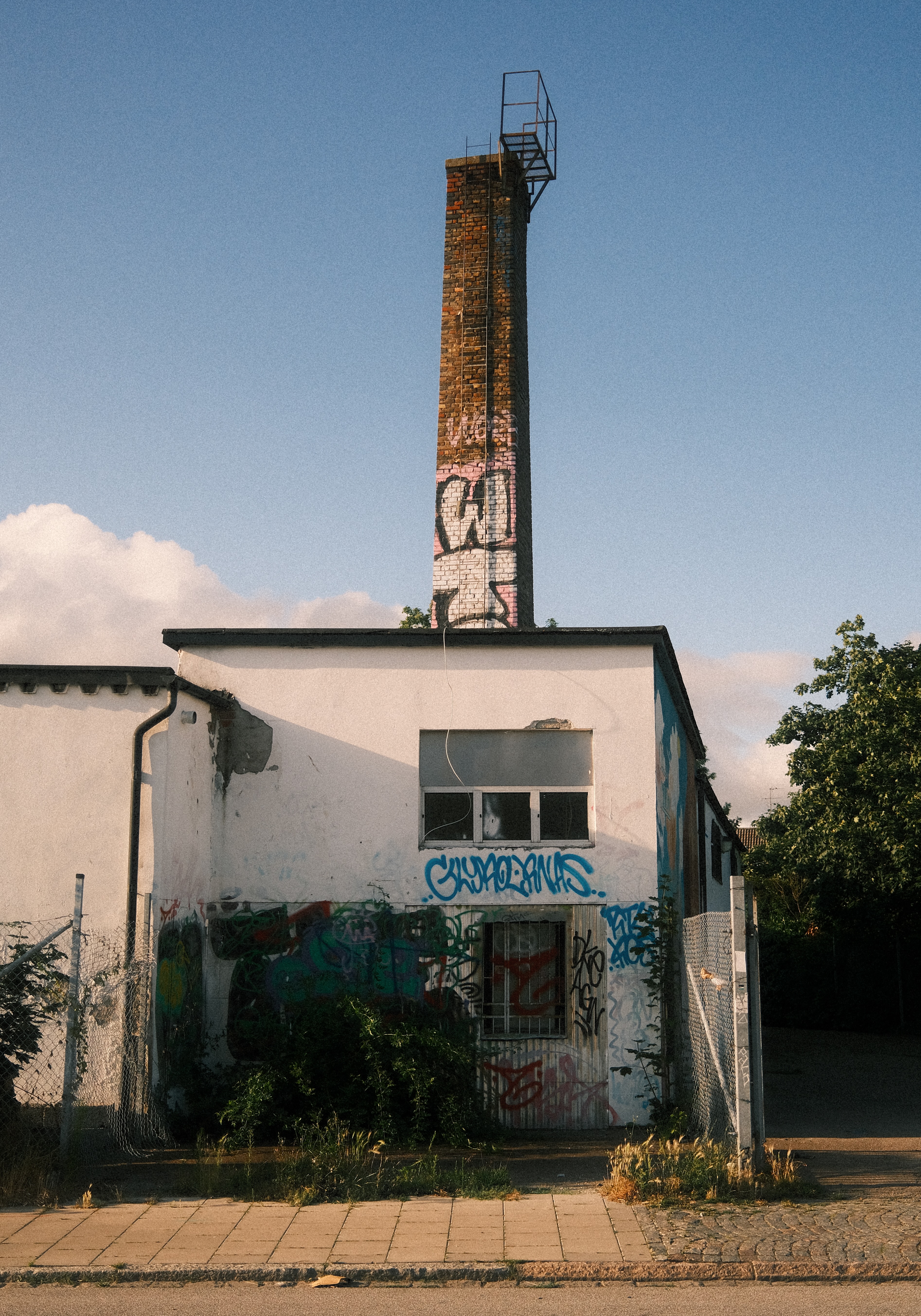
Hanna Björklund / Aktivitetstomten Stök & Bök - en plats arv och identitet
Södra Sofielund embodies a concentrated portrait of Malmö's complexity - an area characterized by both social challenges and strong local community, where cultural life, small businesses, and communal initiatives coexist alongside inequality and insecurity. This diversity is often viewed as a problem, but should rather be seen as a resource. At the same time, many of the area's existing qualities and informal structures risk being lost when the inner city's rules of high-density development take hold of the area.
This work examines how a place transforms over time and how these changes affect the people who live there - and how people, in turn, shape the place. We are molded by the contexts we find ourselves in, while simultaneously leaving our mark on what surrounds us. The work raises questions about who has the right to shape the city, which narratives are given priority, and which risk being silenced.
By examining the physical, social, and cultural elements that shape Södra Sofielund's identity, the work explores how architecture can support the transformation of a place without erasing its inherent qualities. Which values are important to preserve? Which resources promote positive development without displacing existing values?
These questions are made concrete in a design proposal for an old industrial site located in Sofielund's early working-class neighbourhoods. The proposal investigates how new architecture can strengthen the place's identity, preserve cultural-historical and social values, and simultaneously contribute to sustainable development for the area and the people who live there.
Presentation in Swedish.
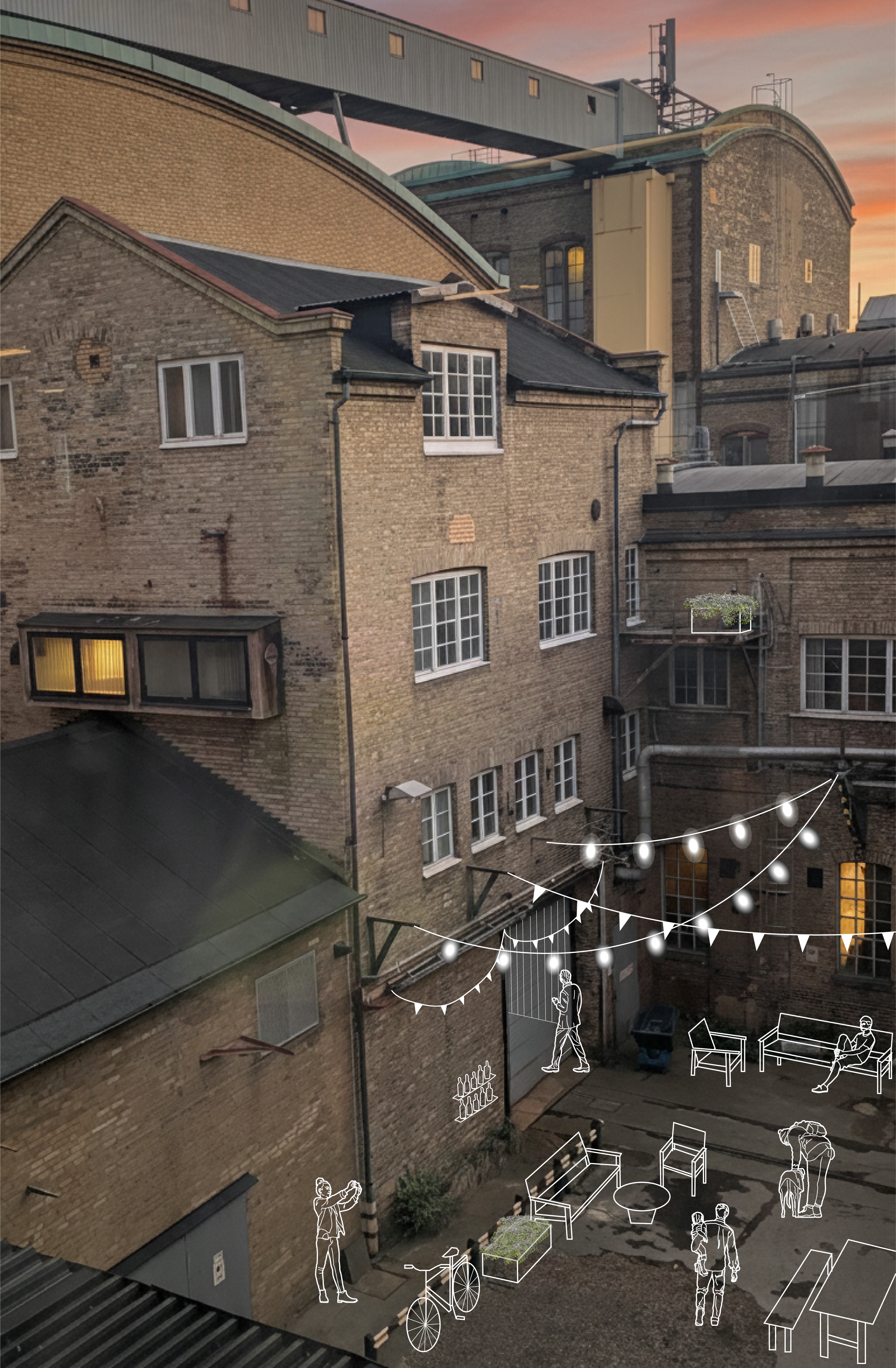
My Hartman / Sockerbruksområdet i Arlöv
The establishment of the sugar factory in 1869 played a decisive role in the development of Arlöv and is therefore of great importance to the small town. With the production relocated, the thesis explores how the sugar factory area may continue to contribute to Arlöv’s development under new conditions.
This thesis investigates the transformation of a disused industrial site with cultural and historical value into a vibrant mixed-use area. The project employs a design approach, combining site analysis, design strategies and iterative work across multiple scales and phases. Central to the project is the integration of industrial heritage as a foundation for new urban spaces.
The design proposal includes new housing, local services, public spaces and streetscapes. New connections to and through the site create new movement patterns and reactivates an area that has been closed to the public for more than 150 years.
Through adaptive reuse and human-centred urban design, the project proposes a shift from spaces formerly shaped by industrial production and machine-based flows, to spaces designed for people, social interaction and everyday life.
The presentation will be held in Swedish.
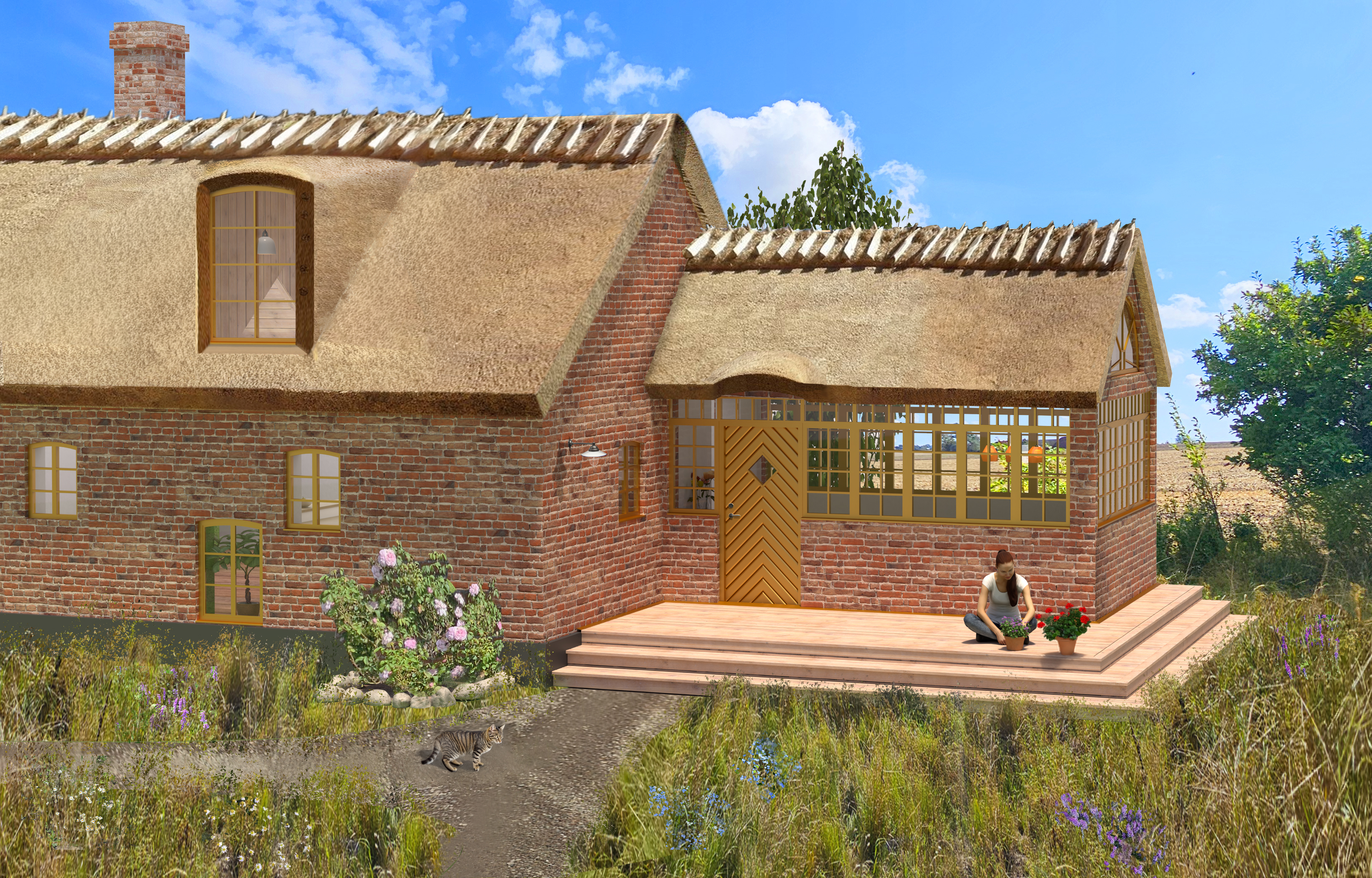
Louise Leijon / Transformationsstrategier för skånska avstyckade gårdar
During the 20th century, agriculture in Scania needed to be streamlined and rationalized, and larger farms did therefore buy up the land of smaller farms to a large extent. The smaller farms now function as single-family homes without the possibility of farming or animal husbandry. This means that the outbuildings on these farms have lost their original purpose and are often empty and falling into disrepair or are used for storage.
Since the farm's operations were discontinued and given the same purpose as a villa, that is, to house a family whose source of income and food procurement was outside the home, social life changed. Fewer people were tied to the farm and the feeling of community that was gained through joint work disappeared.
When small fields of cultivation and pasture disappear in favor of large monoculture farms, biodiversity is also disadvantaged. This has led to the subdivided farms becoming islands of varying flora and fauna amidst large seas of cereal crops.
At the same time, we need a living countryside. By transforming these buildings into new businesses and homes, the farms can come alive again. But it is important that it is done in a sustainable way.
This thesis is an attempt to draw attention to this part of Scania’s building stock and consists of a transformation project where cultural heritage, building conservation, and biodiversity together are the basis for sustainable rural life. I also study the potential of these concepts and their mutual relationship in a transformation context. This results in a set of transformation strategies on how to map, prioritize, and find ways to transform a small Scanian subdivided farm.
The presentation will be in Swedish.
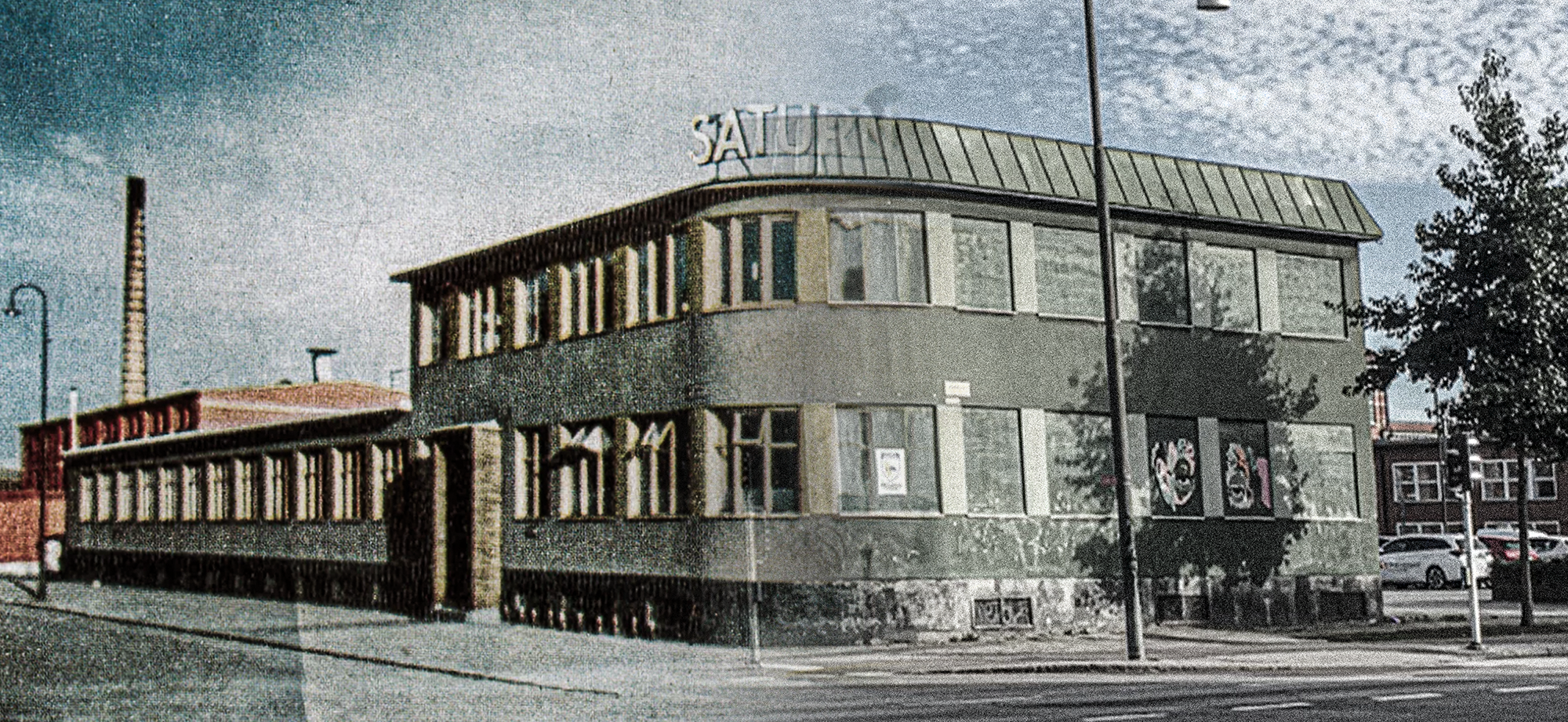
Omid Mirzaie / The Rings of Saturn – a journey through time and space
A transformation of a building with great cultural and historical value.
In a back room at the Fläkta Örn pharmacy at Stortorget in Malmö, laboratorian Anders Nilsson and pharmacist Fritz Borg are sitting and discussing the future. Nilsson has an idea he can't let go of; to start producing mulled wine, liqueurs, essences and other spirits here at home, instead of relying on imported products. The year is 1893 and the company Saturnus sees the light of day. Fast forward about 40 years and Saturnus, which has now grown as a company, begins planning the construction of a new factory in the functionalist spirit of the time. About 60 years later in 2000, Saturnus moved its operations to a modern factory, and Saturnushuset has since been empty and slowly decaying.
This thesis examines how architecture can help build bridges between different socialgroups and create a socially inclusive meeting place where everyone, regardless of background and affiliation, feels welcome. With a starting point in design and social sustainability, this project aims to transform the unused Saturnushuset in Malmö into a sustainable, multifunctional and creative meeting place. Saturnushuset is a culturally and historically valuable functionalist building, located in an area with high social and cultural complexity. By developing an architecturally elaborate and inclusive building and place, with a focus on music, art and culture, the ambition is that the new Saturnus will become a meeting place for young people and adults in the region. With Kulturmejeriet in Lund as the main reference, a similar business with similar conditions, this project aims to reach a large target group, both in terms of age, origin and activities. The ambition is that the project will combine social benefit with high architectural quality in a respectful transformation of a beautiful building, in the heart of Malmö’s cultural hub.
The presentation will be held in Swedish.
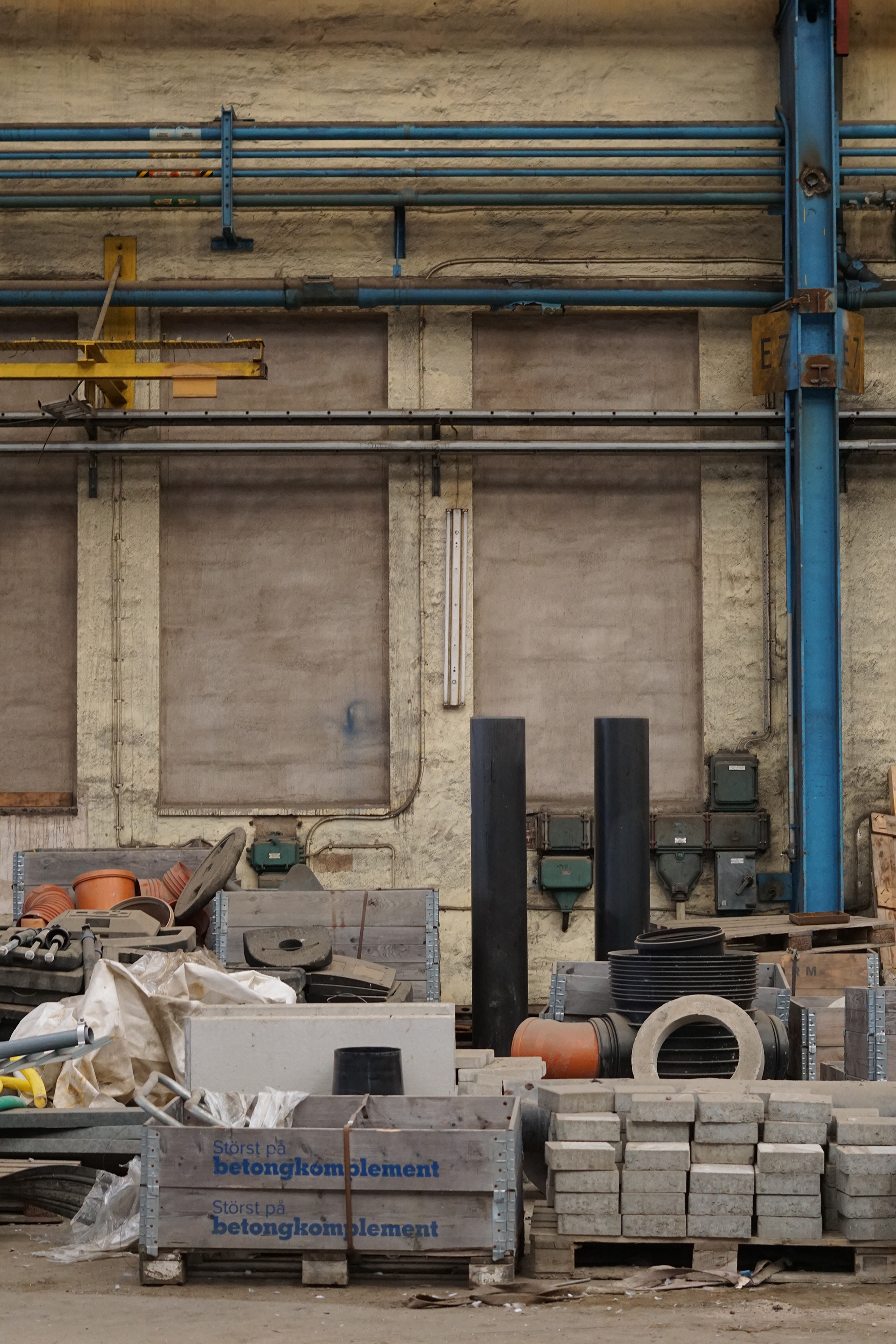
Amanda Perols / Mellan då och sen - för plats och material
Nyhamnen, once defined by industrial activities, ferry terminals and harbor functions, will in the future become Malmö’s new neighborhood with thousands of new housings, workplaces and city functions. Today the area stands empty, defined by large vacant spaces closed off by fences. The area awaits in silence, standing on the threshold between past and future.
In close proximity to the site, there are two materialbanks. The initial phase of this theses involved mapping the material available in these two banks. Measuring, documenting, writing, inspecting, sketching, testing and accepting.
In this project, reuse is more than sustainability, it becomes a method of design. The project uses what is already stored in the materialbanks and the design is guided by the principal form follows availability. Through new compositions of the reclaimed material, the project allows the city’s material memory to continue into it’s future and explores how this can activate a site in waiting. The project explores the question: how can meanwhile use of site and material strengthen one another?
By enabling new forms of appropriation, the site can gradually become part of the citizens habits and memories. As more people develop routines and a desire to dwell here, the emerging neighborhood gains a stronger start when completed. In this way, an urban void can be transformed into a place of collective memory.
The presentation will be held in Swedish.
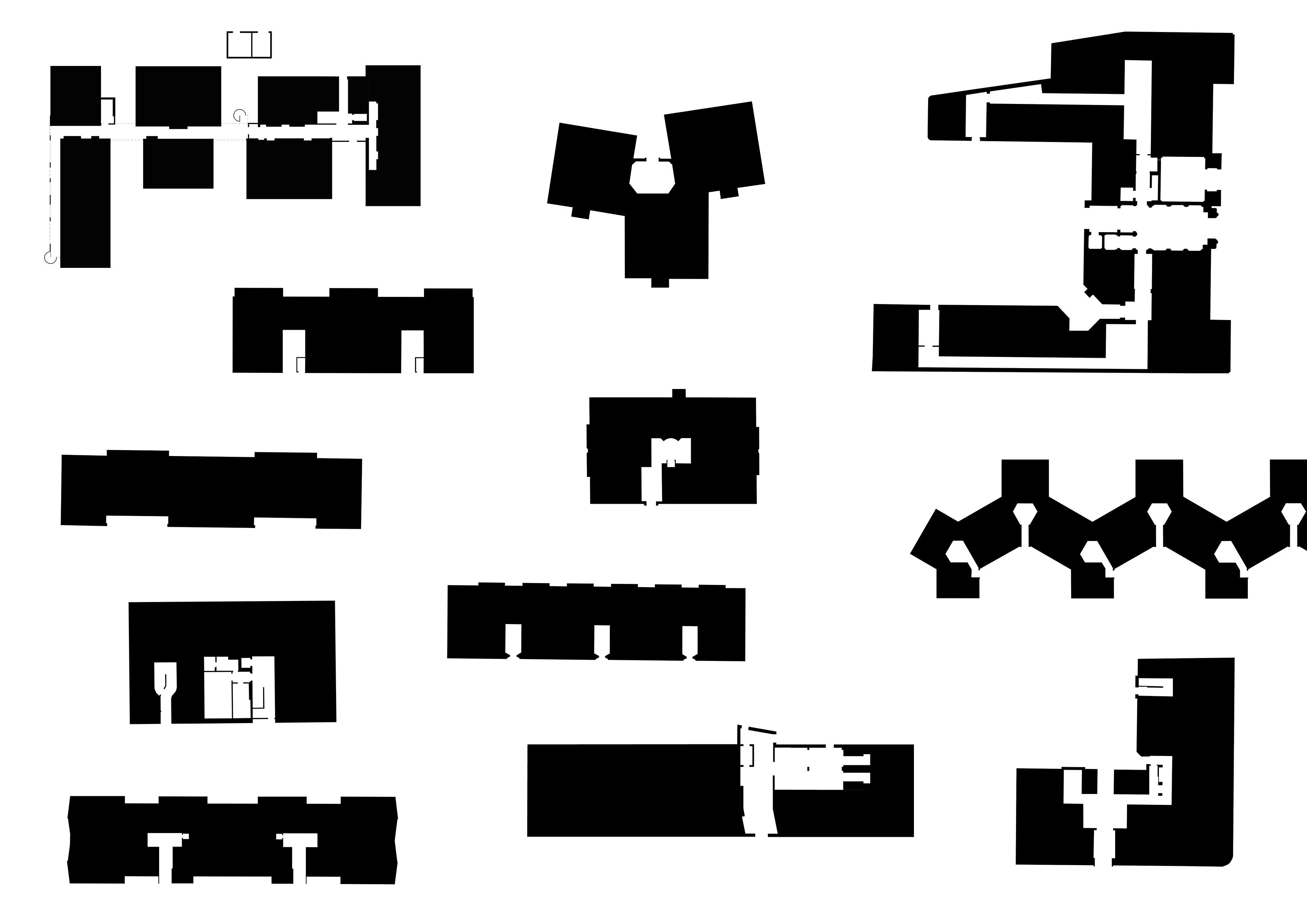
Adelie Centerstam / Mellan gatan och lägenheten
In 2024 over half of Sweden’s population lived in an apartment. Living in an apartment means that you live close to your neighbors and share an entrance space through which you pass to get to your apartment. I call this the entrance room and the staircase room. In this thesis I have researched these rooms, their architecture and their potential for positive social interaction.
The architecture that we see and experience every day affects how we interact with the world and in turn how we feel. During the pandemic it became increasingly clear that real world social interaction is important for our mental wellbeing. I believe that the design of the entrance and staircase room in an apartment building affects the potential of small meetings between people and therefore also their potential for increased happiness in their everyday lives.
I have read literature and gathered information regarding the functional, spatial and social qualities of the entrance and staircase room. Through that lens I look at existing Swedish and European apartment buildings and analyze the form and space of the entrance, entrance room, staircase, and the relationship between the rooms, the building and the street. After looking at an excerpt of objects with varying design I have created typologies which describe the different variants of entrance situations and staircase rooms that I have found.
For big companies looking to maximize profit, the staircase and entrance room in apartment buildings are often built as small as possible. I aim to shine a light on the value of this space and that with small measures, one can improve the design and in turn the experience of the room as well as the experience of living in and visiting the building. Maybe that would result in the same amount of profit as the alternative?
The presentation will be held in Swedish.
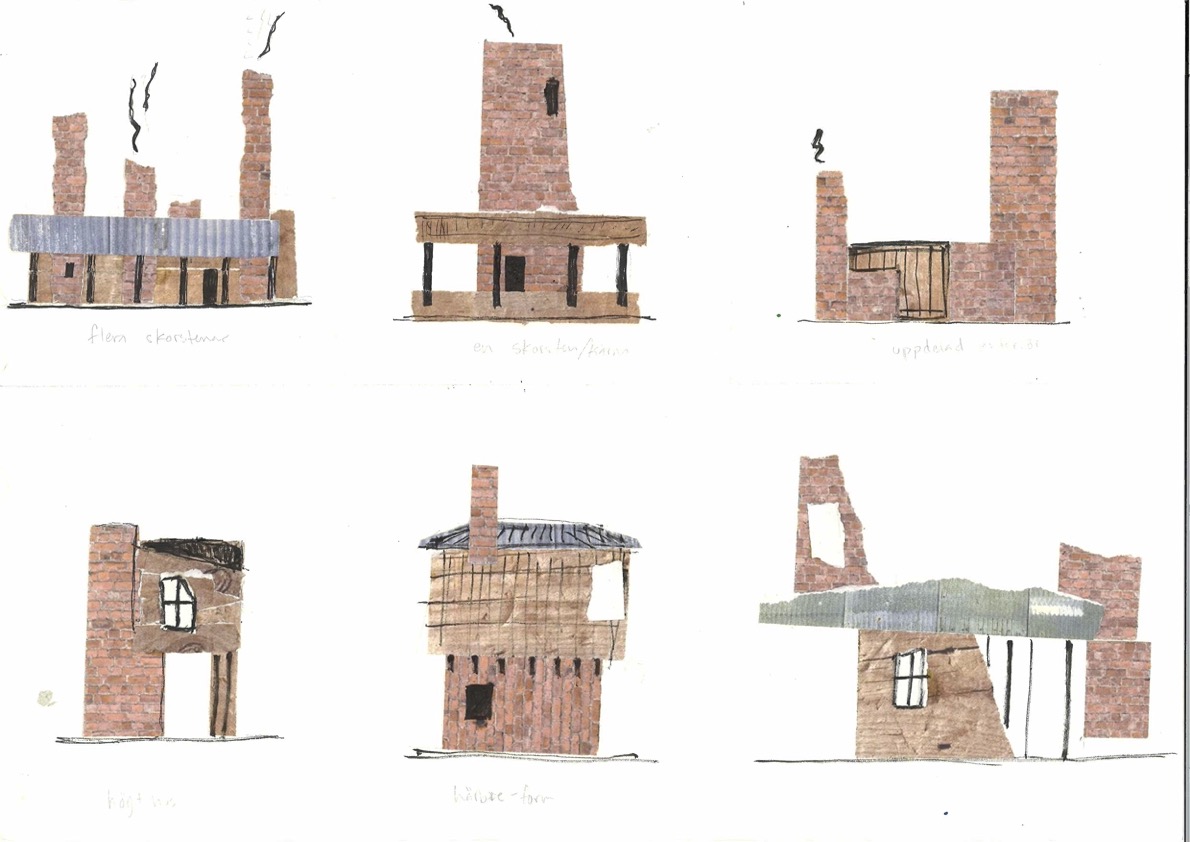
Linnea Johansson/ Hus för Hand
Starting with the hand, this thesis investigates architecture at the intersection of craft, self-building and industrial production, with a focus on human presence in relation to sustainability.
Architecture is approached as a human practice of making, in which drawing, building and experiencing share the same tactile process. The project critiques the pursuit of aesthetic perfection and uniformity, emphasizing how irregularity, joints, and imperfections contribute to tactile richness, adaptability, and visual interest.
Through a design-based investigation, it explores how construction can accommodate variation in form, color, and detail to make room for reused materials. Beginning with hands-on workshop explorations, the project focuses on dwellings and prototypes through models, collages and abstract studies. By comparing handcrafted and industrial approaches, the thesis proposes strategies for adaptable, human-scaled architecture that values material awareness, expressiveness and reuse.
The presentation will be in Swedish.

Jon Liander Ankarcrona / Current Architecture & Our Human Experience Within It
As society changes, architecture inevitably does as well. We’re now entering a future with unprecedented conditions mixed with our older societal tendencies. Digitalization is one name and one perspective we call this change that is specifically altering the way we form our conception of our world; dynamics for how ideas proliferate and spread amongst ourselves now depends on a digital process totally unbound by physical space. This, and other topics regarding: politics, economics, technology and culture, is in this work related to architecture and the creation of our built environment.
This series of essays is a tour through what architecture is and what we perceive it to be! What we think is its limits and what influences its manifestation. By identifying the relational-structures in current society and the complex dynamics that holds control over the creation of the built environment. This work critically reflects upon the contradictions that appear when looking under the hood of our profession, questioning the truths we apply to current architecture, investigating their merits and origins.
This work is seeking to communicate, and when focusing on this rejects the formalistic style, embracing a free voice which equals a different type of intellectual transparency, honesty! Embracing the fact that the author is a person, first and foremost, pertains to the cohesive thread that ties these eclectic essays together: that what everything we do, is for the human experience!
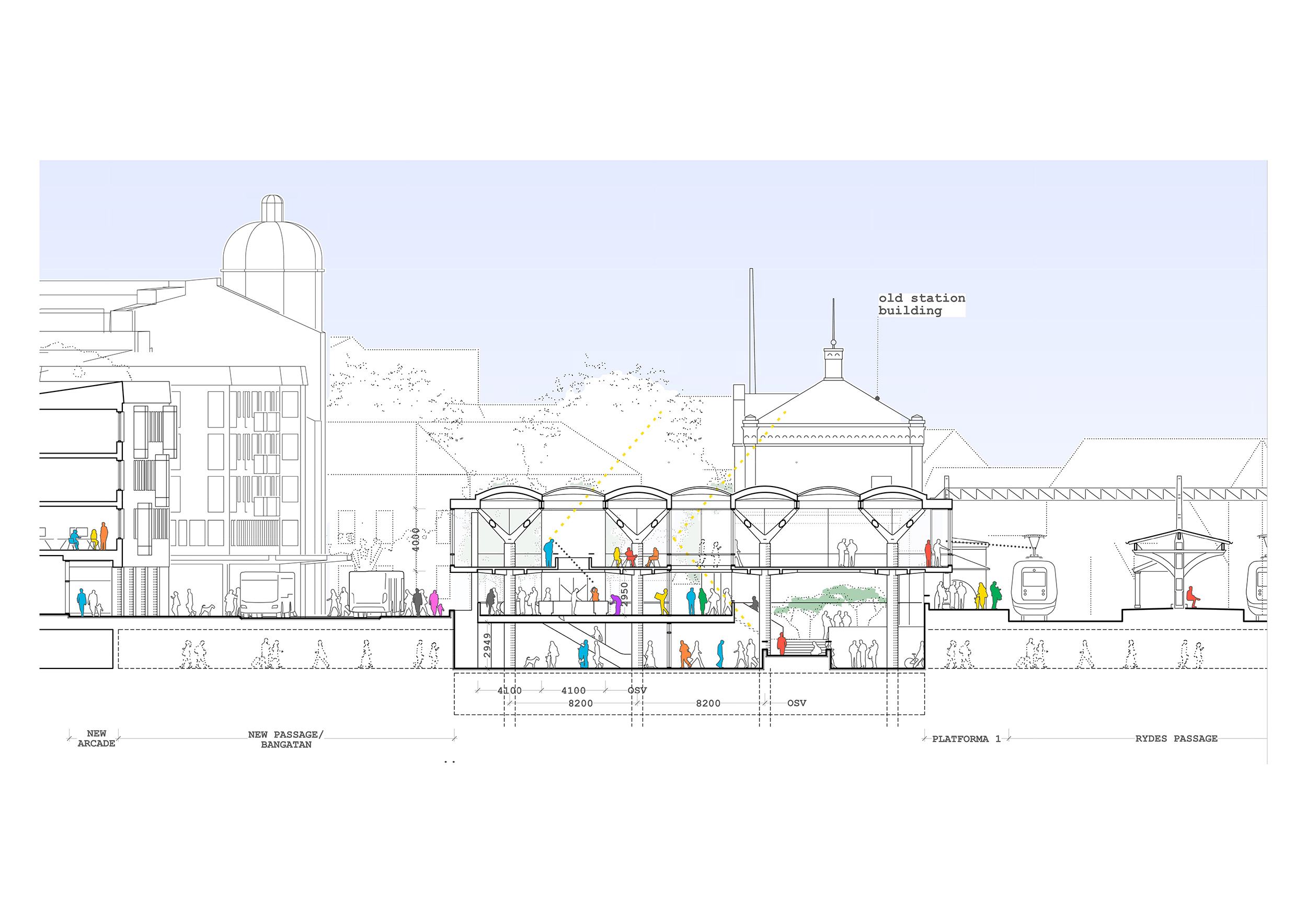
Olof Nilsson / Lund - The Railway and the Urban Fabric
The city is a place where different activities can exist side by side: the private next to the public, the sacred next to the everyday. Such coexistence depends on a rich variety of spaces. Fronts and backs, insides and outsides, large and small rooms form a spatial ecology of streets, passages, courtyards, and squares.
Lund Central Station is one of southern Sweden's most intense mobility nodes. It is a site where historic urban structure meets contemporary infrastructure. Today, the railway forms a strong boundary through the city, resulting in fragmented movement and large, undefined spaces for passing through.
The proposal treats this boundary as a spatial opportunity. The station area is approached as an extension of the city rather than a single object. Through a sequence of connected spaces and layered structures, the project reconnects the urban fabric across the tracks and establishes a continuous spatial framework for everyday urban life.
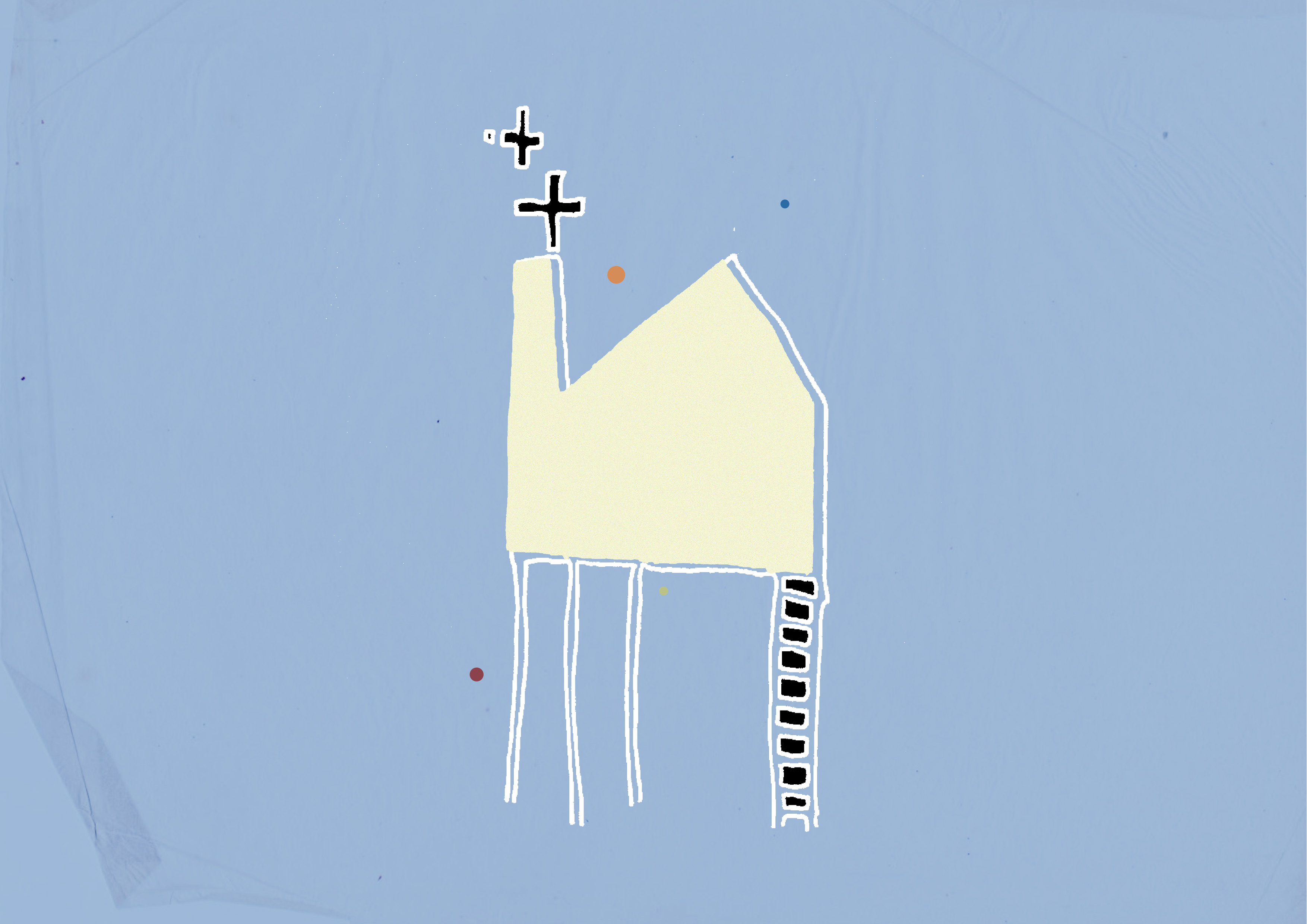
Saga Persson | Signe Rittfeldt / Where Are We Heading?
Have you ever disappeared into the world of a book, letting the story carry you on a journey? A place described in writing can become intensely real, as if you were there yourself. Despite the absence of images, drawings, or models, which are architecture’s more traditional media of representation. Here, text is allowed to stand on its own, shaping a reality in its own right.
This project explores that potential through the art of storytelling by writing a book. In On the Right Path, we depict our walk along the pilgrimage route Via di Francesco in Italy, taking the reader on a journey while attempting to approach architecture’s more immaterial qualities. The intangible, what cannot be touched or measured, what is remembered and misremembered, associations, encounters, and details.
The book functions both as a tool and as the result of a method. Through written narrative, we investigate how places can be articulated through lived and subjective experience. These aspects often remain peripheral yet influence us more than we tend to realize. We ask whether such qualities can be conveyed without drawing, measuring, photographing, or otherwise visually representing a place.
Every place holds as many experiences as there are people who encounter it. Written in a relatively relaxed, non-academic style and articulated through two authorial voices, the book gives space to the personal and situational rather than the measurable and monumental.
The book is complemented by the report Where Are We Heading?, in which the theory, method, and results are discussed through a phenomenographic and humanistic perspective on architecture. The project proposes writing as an alternative and complementary way for architects to understand, shape, and communicate a place. This is a method that does not seek objective truth, but instead acknowledges the complexity of architecture and its grounding in lived human experience.
The presentation will be held in Swedish.
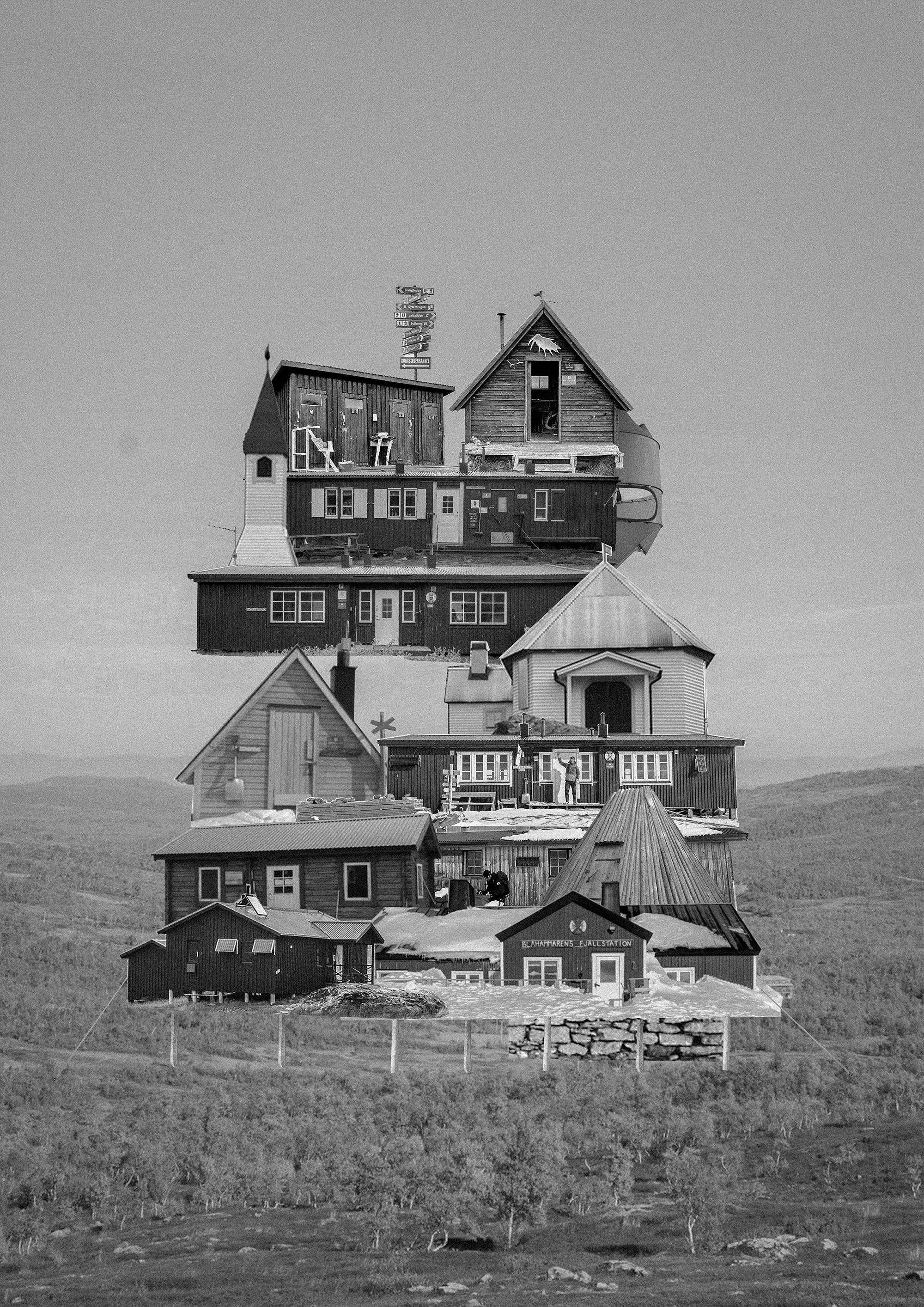
Mathilde von der Groeben | Sandra Erlandsson / Katalogen
- A system of tourism related built environment along hiking trails in the Swedish mountains
With a growing interest in hiking and nature-based tourism worldwide, the Swedish mountain regions have become increasingly popular destinations for both international visitors and domestic tourists. At the same time, these landscapes are important grazing grounds for reindeer, which has led the Swedish Tourist Association to scale back its operations in Jämtland by closing restaurants and reducing accommodation capacity. Yet, some form of infrastructure needs to exist, which leads us to multiple questions: How comfortable should a trip to the mountains be? How can design encourage visitors to act responsibly? And what might the future of tourism-related buildings in the Swedish mountains look like?
Through a catalogue of six small-scale objects and buildings, our project investigates a new general architectural system for the mountain environment. Ranging in scale from a simple bench to a mountain hut, our aim with these interventions is to function as incentives to explore the landscape in a more responsible way.
The presentation will be held in Swedish.